






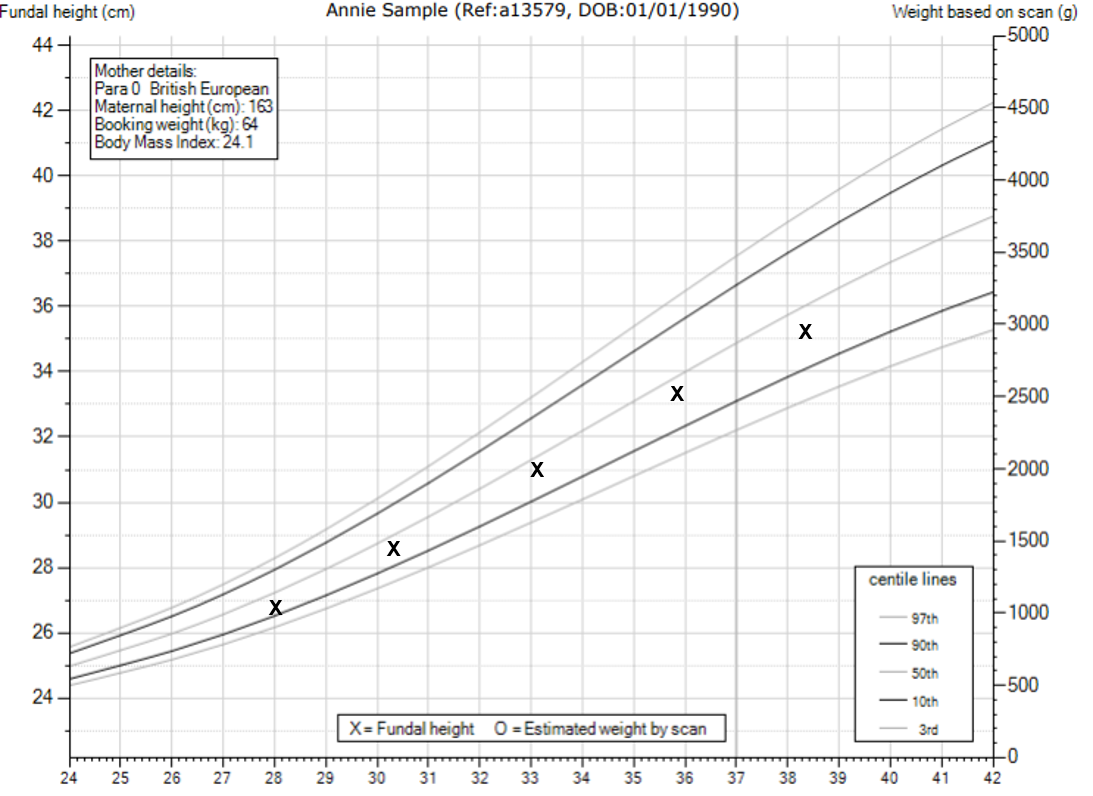
The charts delineate the optimal growth rate in each pregnancy, to the ‘term optimal weight’ which the software determines by customising according to the physiological characteristics of each mother in each pregnancy.
The plot of the serial SFH measurements here illustrate that the growth rate is normal.
NB: The rate can be normal even if the actual values are not within normal limits (10th and 90th centile lines).
SFH measurements should be recorded to one decimal place e.g. 27.8cm
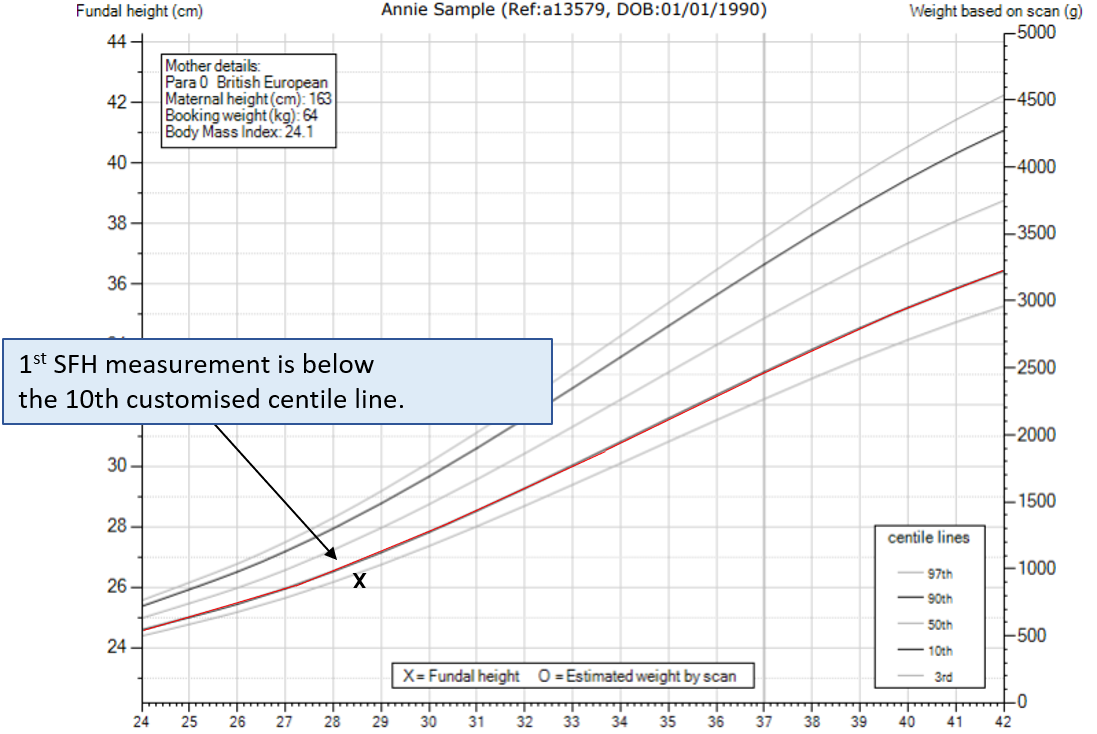
A first SFH measurement below the 10th centile MAY be an indication of SGA and of potential concern as a single measurement cannot reassure that the growth rate is normal. Therefore it is an indication for an ultrasound scan to determine the EFW which should be plotted, with further management as set out in the GAP guidance.
The mother should be told that a fundal height measurement is an assessment of the uterus and its contents, while a scan will be able to estimate the baby’s weight.
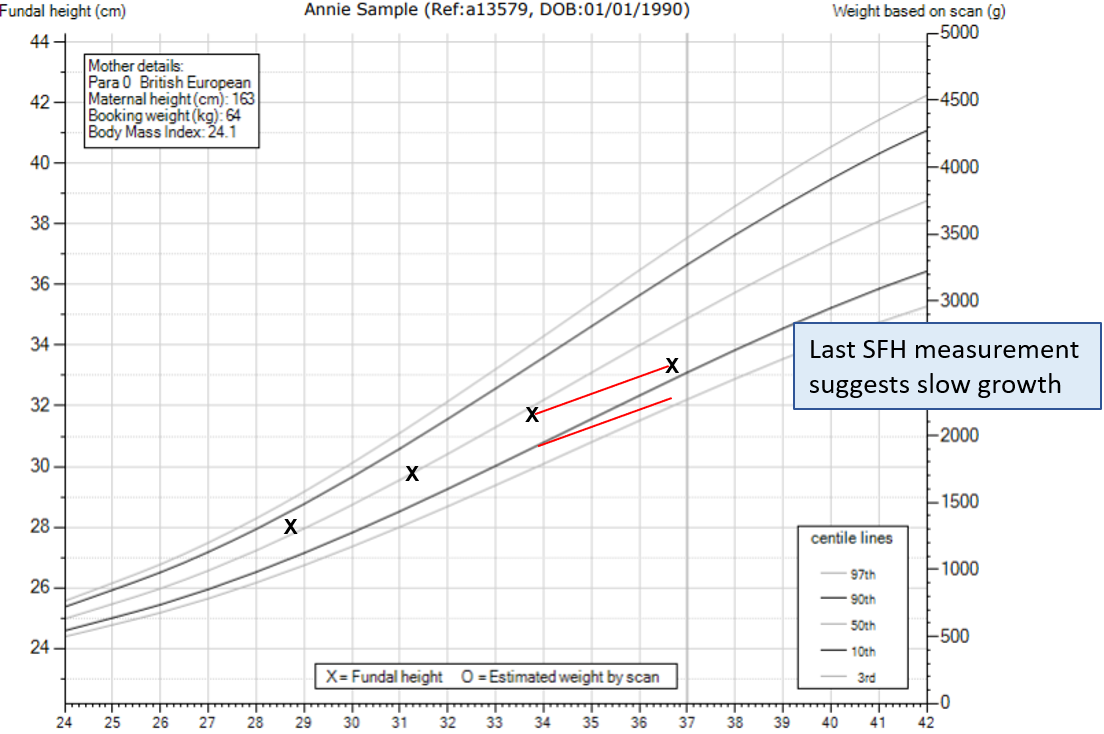
Example of SLOW GROWTH suspected from SFH measurements. This is defined as the slope or growth rate between measurements which is slower or flatter than the slope of the 10th centile line over the same gestational age interval, asn on the graph.
A demonstration of how to make this comparison using a set square is available here.
‘Slow growth’ includes ‘no’ or ‘static’ growth. It is an indication for referral for scan.
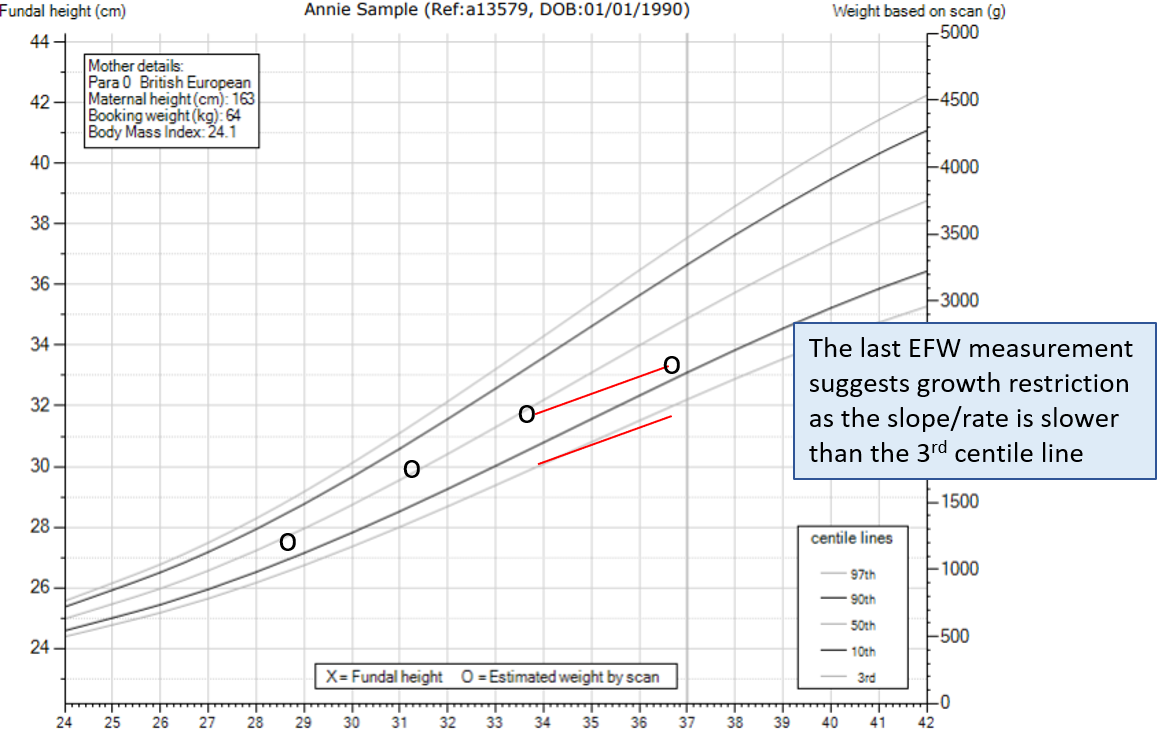
Example of SLOW / RESTRICTED GROWTH based on scan estimated fetal weight. For serial EFWs the cut-off limit for ‘FGR’ is when the growth rate between measurements is slower than that of the 3rd centile line, over the same gestational age interval.
A demonstration of how to make this comparison using a set square is available here.
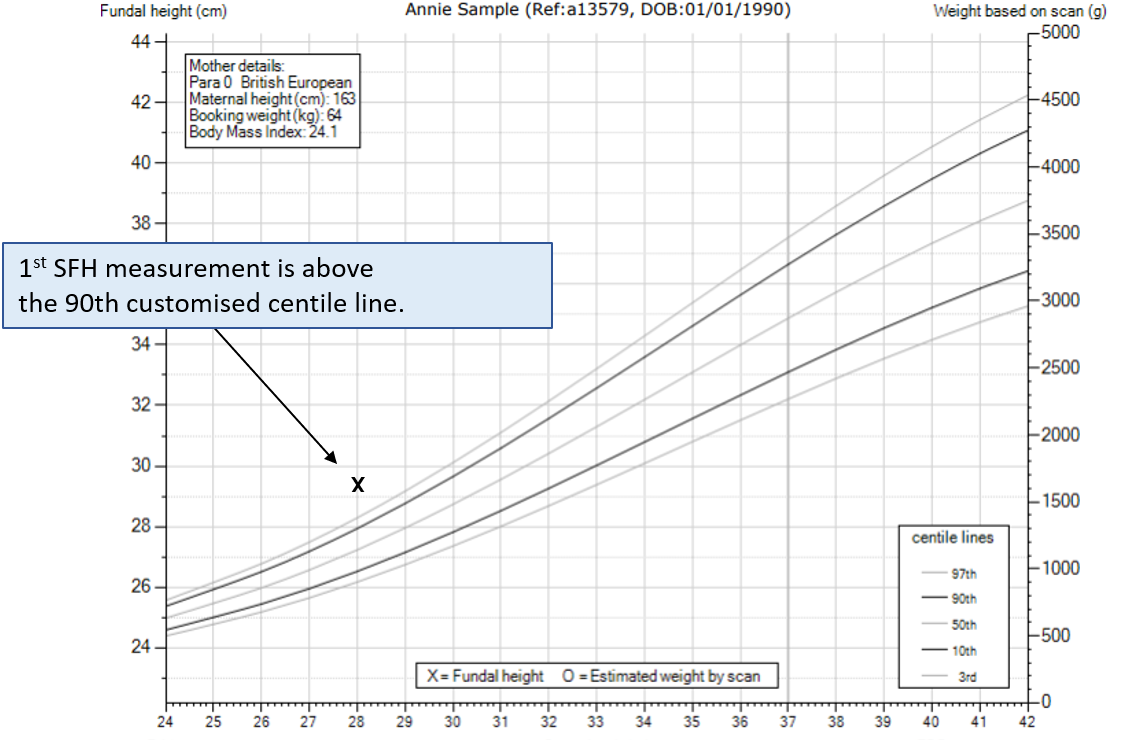
A first SFH measurement above the 90th centile itself is not an indication for referral, as it usually does not reflect a large baby. The most important indicator is whether subsequent measurements will normal accelerated growth (see next).
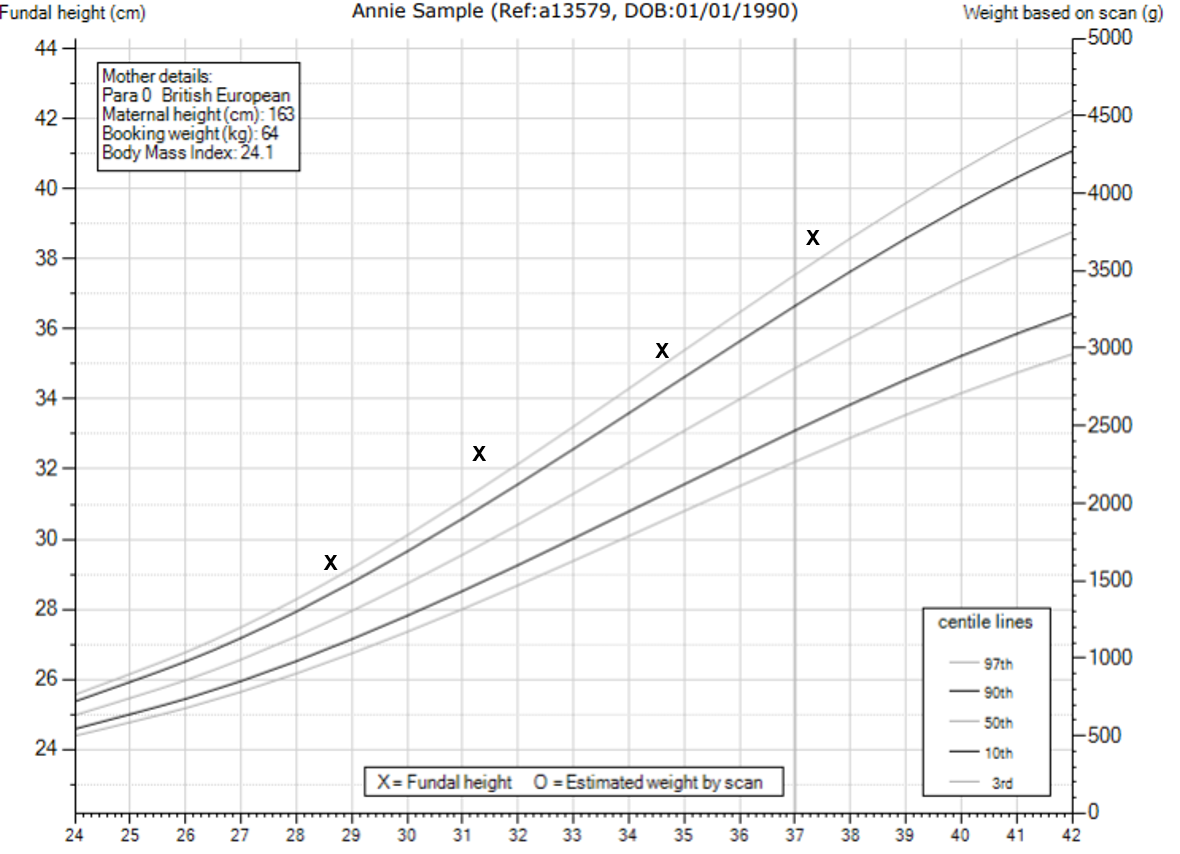
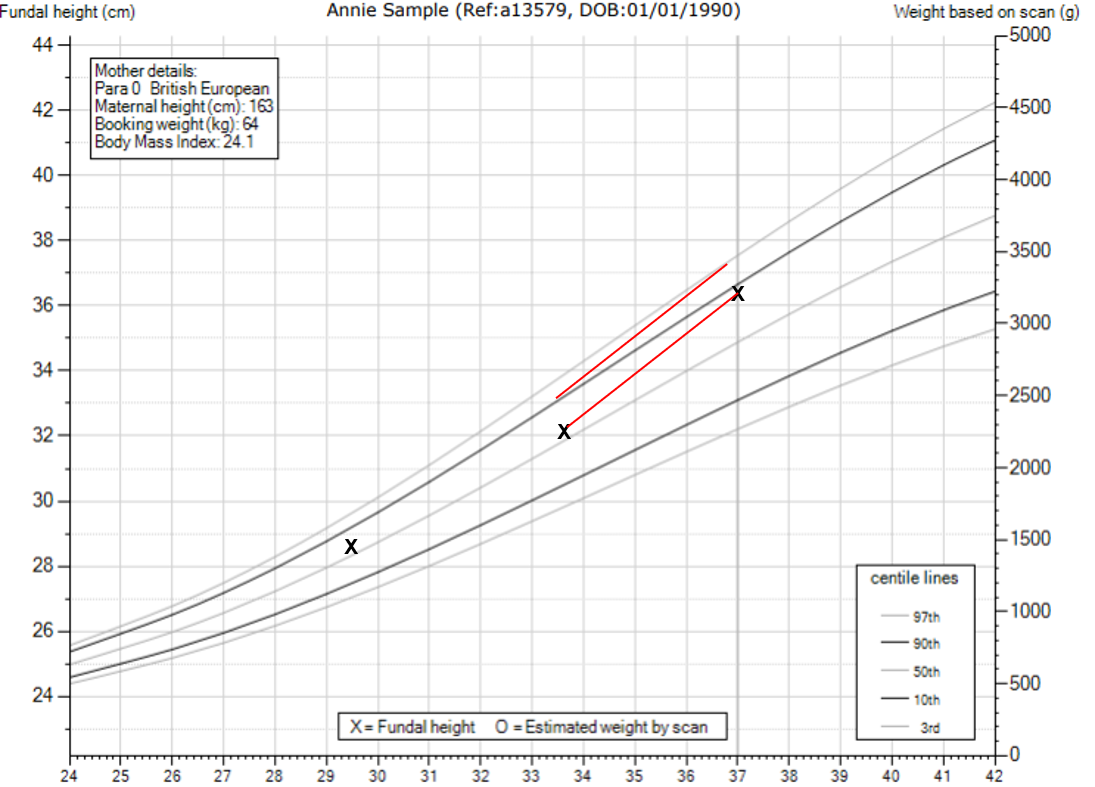
Accelerated growth by fundal height is defined as a growth rate that is faster / steeper than the 90th centile line. It requires referral for scan.
As in slow growth, a set square can be used to compare growth rates.
For serial measurements by scan EFW, the 97th centile line should be taken as the limit for excessive growth.